Chubby Furnitures
Orientation towards joyful design: NEOTENIC DESIGN
The shortened examples obtained by the usual ergonomic periods, the resulting forms, and the neotenic coating of the fattening bodies with colors reminiscent of pastel-toned sugar, meet with their buyers in the collections of the protectors on them today.
Babies whose eyes and cheeks are huge for their chubby face, impress us as soon as we see them and make us watch them fondly. According to the etymologist Konrad Lorenz, who received the Nobel Prize in physiology and medicine in 1973, these childlike physical features instinctively create a feeling of happiness in our brain. We can also base our interest in furniture and decorative products with childlike lines, which have been recurring in the production of designers lately, on this scientific explanation. We can also get the happiness of our plastic toys as children from the curved, short and chubby-legged chairs we have at home now.
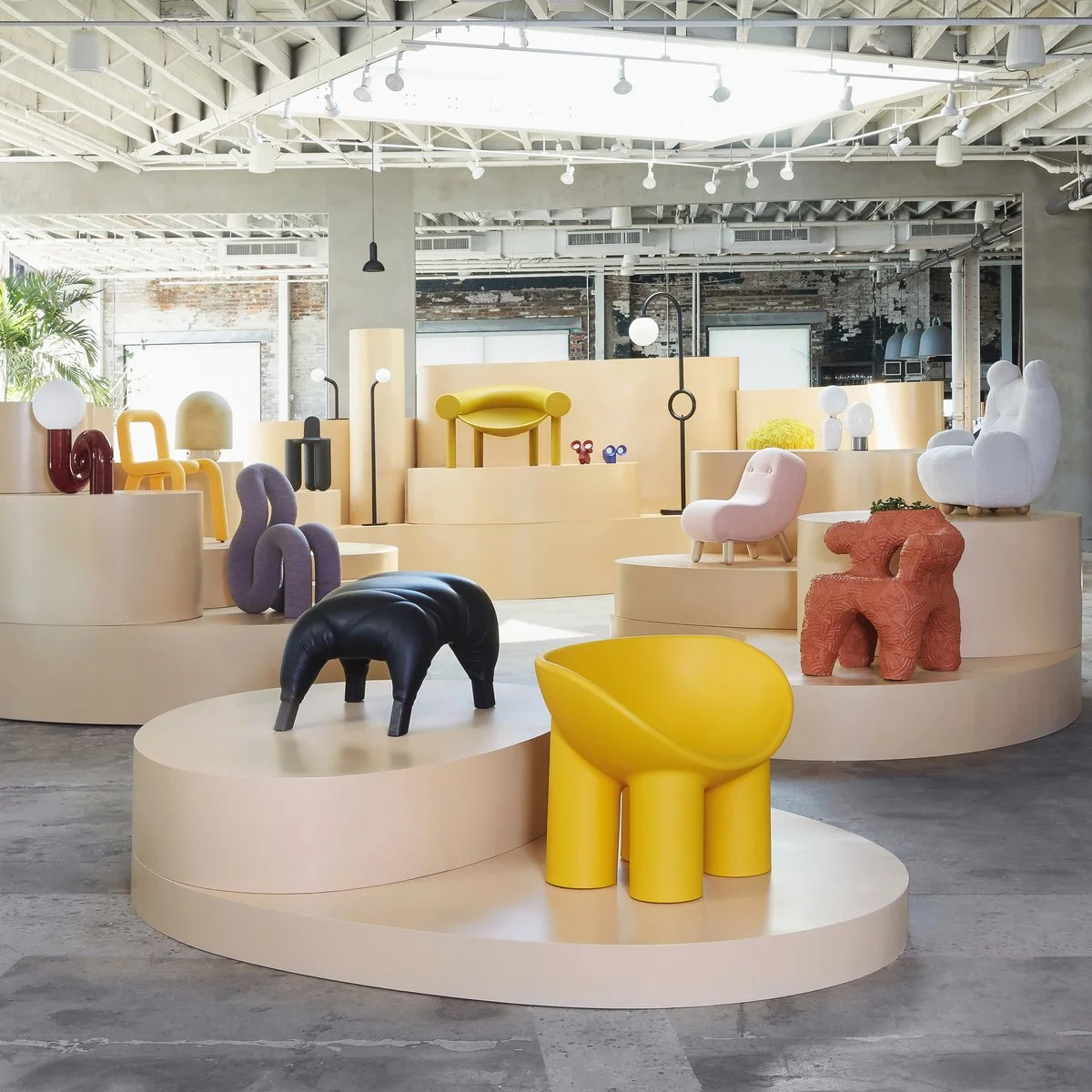
The common feature of the products in the exhibition "Neotenic Design", curated by Justin Donnelly, one of the creators of the Jumbo brand, at A/D/O in March of last year, was expressed by the designers as a softened version of minimalism. There was something else that Donnelly learned by talking to the designers he worked with during this exhibition: Most of the designers did not set out to create childlike forms on purpose.
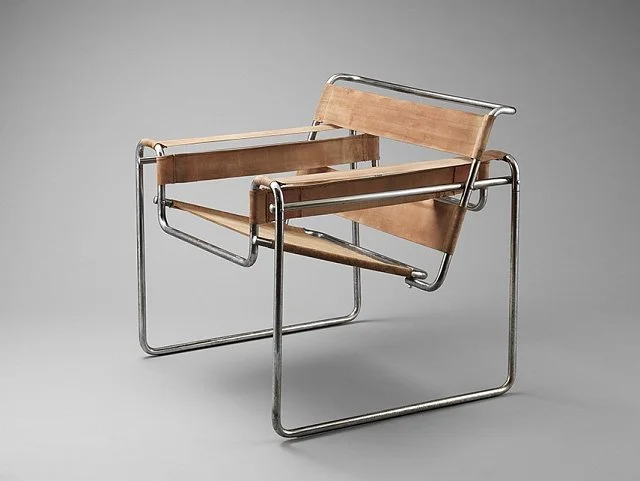
After the Russian Revolution in 1917, a political regime ideology strongly opposed to capitalism created the Constructivism movement by supporting contemporary art. In the same year, in the Netherlands, which preferred to remain neutral in the war that broke out in France and Germany, several artists and architects founded De Stijl magazine and developed a new abstract art style dominated by horizontal and vertical lines. In 1919, after the defeat of the war, the Bauhaus emerged in Germany with a revolutionary ideology that overthrows the monarchy and created the hope for a socialist society. These currents; It had angular, rectangular plan, rigid and strict lines design criteria. We can think that the use of these angular forms after the war is the answer of architects and designers to the search for social harmony and reveals how they feel in the environment they live in. In particular, the Bauhaus was a movement that rejected individuality, focused on producing together as a 'school', and saw all creative disciplines as 'one'. This attitude can be explained as a result of the search for harmony after the war at that time. Today, when faced with many problems such as civil war, poverty, unemployment, global warming, and many other problems that can make us all hopeless, it is quite understandable that designers avoid solid forms and create a soft and childlike harmony with rounded forms.

With their thickened and shortened forms, soft and rounded bodies, the designs called neotenic create an almost zen effect in the space they are in with the help of pastel color tones. In order for this effect to be felt more strongly in the interior, biophilic design criteria, which are called curative architectural design, should also be met. Biophilic design is based on improving human health by combining the built environment with nature, and brings nature to living spaces with direct or indirect methods.
The term biophilia was first used by psychologist Eric Fromm in 1964. When we look at its etymological origin, we see that bio is life and -philia is "friendly". Biophilic design is based on the principle of “Every element that reminds nature makes people happy and feels good”.
In the quarantine period we are in today; consumer behavior is changing in line with the concept of biophilia. * In the researches, we can see that the fastest growing e-commerce sectors in recent months are in the areas of healthy nutrition and healthy living. We are looking for ways to feel better in our living spaces, where we spend every hour of our day and which have also become an office, gym and recreation area.
“We can say that neotenic designs have many common design criteria with the concept of biophilia, such as earthy colors, soft and light fabrics, and unpatterned surfaces. Today, neotenic furniture is in a position to enable us to establish biophilic living spaces and lessen the impact of the problems we face.”